


DIB Cyber Cert Agenda 2026
Two days. Four modules. One comprehensive roadmap to DIB cyber compliance. Jump to:
 May 4 | Six years of CMMC clarity, compliance, and competitive advantage.
 May 4 | The future of the global certification standard in the federal space.
 May 5 | Surveying the effort to leverage leading technology for national security.
 May 5 | Cloud innovation powered by national security compliance.
Monday, May 4
8:00-9:00 Registration
9:00-10:10 Plenary Keynotes
Salon EFG
09:00 Welcome and Introduction (P00a) Melissa Kaiser, Director, Compliance, SOCSoter
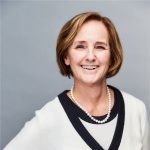 09:10 CMMC—Why We Are Here and Where We Are Going (P00b) Stacy Bostjanick, Former OUSD A&S, Director of Cybersecurity Maturity Model Certification (CMMC) Policy, DOW
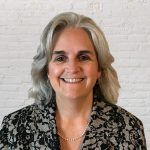 09:40 Industry Keynote: Stories from the Front Lines (P00c) Stacy High Brinkley, Sr Mgr, Industry Spec Svcs, BDO
10:10-11:00 Networking Break in Exhibits
11:00-12:30 Conference Sessions
Salon E
| CUI (M01) |
| Moderator: Cole French, CMMC Practice Lead, Kratos Defense and Security Solutions |
11:00 When Code Becomes CUI: Conducting CMMC Assessments on Custom Software (M01a) Kyle Lai, President and CISO, KLC Consulting
11:30 What Not to Miss When Scoping CUI in Your Environment (M01b) Rachel Bassford, CUI Consultant, DEFCERT [60 Min]
Salon F
| Case Studies (D01) |
| Moderator: Jennifer Lee, Director of Channels, RADICL |
11:00 Understanding the Realities of Continuous Monitoring for the Affirming Official (D01a) George Perezdiaz, Managing Director & Lead CMMC Assessor, PEREZDIAZ [30 Min]
11:30 Engineering for Verification: The Technical Realities of Passing CMMC (D01b) Scott Whitehouse, VP, Compliance, C3 Integrated Solutions [60 Min]
Salon G
| C3PAO Perspectives (K01) |
| Moderator: Scott Bernoudy, Founder and CEO, Open Approach |
Track Sponsor
11:00 CMMC Vendor Playbook: How to Select a Trusted C3PAO, MSP, CSP, or RPO (K01a) Andrew Freund, Founder & CEO, Kraken Compliance
11:30 Lessons from a C3PAO: Top 10 Insights from the First CMMC Assessments (K01b) Michael Brooks, CMMC Strategy & Engagement Director, A-LIGN
12:00 An Assessors View on False Starts (K01c) Corey Garretson, Compliance Consultant, RADICL
12:30-13:30 Lunch in Exhibits
13:30-15:00 Conference Sessions
| CMMC Policy & Standards (L02) |
| Moderator: Wilson Bautista, CEO, Jun Cyber |
13:30 CMMC Guidance from a DOD Perspective (L02a) Derrick Davis, Senior Fellow of the CREM Institute at UMBC
14:00 Panel Discussion: Forecasting CMMC for 2026 and Beyond (L02b) Leader: Stuart Itkin, Chief Security Evangelist, Futurefeed Panelists: Alexander Major,Partner, Co-Chair, Government Contracts & Global Trade Practice, McCarter & English, LLP; Tom Tollerton, Principal, Forvis Mazars US; ; [60 Min]
| CMMC Assessments (M02) |
| Moderator: Scott Bernoudy, Founder and CEO, Open Approach |
Track Sponsor
13:30 CMMC Assessment Process (CAP) (M02a) Fernando Machado, Managing Principal/CISO, Cybersec Investments
14:00 What to Do (and Not Do) in a CMMC Assessment (M02b) Derek Kernus, CEO, Aethon Security Consulting
14:30 Top 5 Issues of CMMC Level 2 Assessments (M02c) Carter Schoenberg, Lead Assessor and CSO, Soundway Consulting
| CMMC in Practice (E02) |
| Moderator: Kyle Lai, President and CISO, KLC Consulting |
13:30 Multi-Framework Intelligence: Reusing CMMC Evidence Across ISO 27001, SOC 2, and Beyond (E02a) Justin Beals, CEO & Founder, Strike Graph
14:00 Closing the Readiness Gap: What CMMC Assessments Reveal About Contractor Preparedness (E02b) Bill Wootton, Chief Revenue Officer, C3 Integrated Solutions [60 Min]
15:00-15:30 Networking Break in Exhibits
15:30-17:00 Conference Sessions
| CMMC Ecosystems (L03) |
| Moderator: Jay Diem, Founder & CEO, SloariX |
15:30 CMMC, NATO, and Allied Cyber Standards: Managing Defense Compliance Across the Atlantic (L03a) Curtis Chappell, Vice President, Security, Thales Defense & Security, Inc. (TDSI)
16:00 A Trusted Ecosystem Is Essential for Building and Maintaining a Low-Cost & Effective Compliance Program (L03b) Leslie Weinstein, Owner, The Cyber Advisor
16:30 CMMC’s Here, but Is My Supply Chain Ready?: Understanding and Allocating the Risk Presented by CMMC’s Mandatory Flowdown Requirements (L03c) Roger Abbott, Co-chair of the ABA Public Contract Law on Cybersecurity and Emerging Technologies, Miles & Stockbridge
| Assessment Prep (M03) |
| Moderator: Jennifer Lee, Director of Channels, RADICL |
15:30 If It Isn’t Documented, It Doesn’t Exist (M03a) Stuart Itkin, Chief Security Evangelist, Futurefeed
16:00 The Road to CMMC Level 2: When and How to Prepare for Your Assessment (M03b) Tony Bai, Chief Solutions Officer, RISCPoint
16:30 Insights From Real World CMMC DIB Assessments (M03c) Ali Pabrai, Lead CCA, CCP, RPA, RP, CISSP (ISSAP, ISSMP), HITRUST CCSFP, MSEE, ecfirst
| CMMC in Practice (E03) |
| Moderator: Wilson Bautista, CEO, Jun Cyber |
15:30 What Is the Assessor Looking for? Avoiding Pitfalls in Your CMMC Assessment (E03a) David Bedard, Director of Compliance, KTL Solutions
16:00 Say WHAT? – Inside the Mind of a CMMC Certified Assessor (E03b) James Goepel, Executive Vice President, Peak Infosec [60 Min]
17:00 Adjourn
Monday, May 4
08:00-09:00 Registration
09:00-11:00 Conference Session
Salon A
| Introduction and Overview (R00) |
| Moderator: Bill Downer, Vice President, Sales, RedData, a division of RPI-CS, Inc. |
09:00 Common Criteria: What’s Now, What’s Next (R00a) Jon Rolf, Independent, Retired NSA NIAP Director
This session explores the current landscape of U.S. protection profiles, product availability, and emerging challenges over the next two years. It highlights recent NIAP/CCEVS developments and international priorities, and concludes with a discussion on necessary next steps, along with audience questions and industry insights on where to focus and improve.
09:30 Differences Between NDcPP v3.0e and v4.0 (R00b) Kristy Knowles, Security Research Engineering Technical Leader, Cisco
A practical “what’s different now” briefing on CC:2022-era planning: how PP transitions and evolving mutual recognition expectations will impact product strategy, multi-market certification decisions, and schedule risk for DIB suppliers.
10:00 Lessons Learned from Recent Certifications: Reducing Rework in Scope, Evidence, and Crypto Dependencies (R00c) Justin Fisher, CCTL Technical Director, Leidos
Case-study-driven guidance on what actually causes rework late in evaluations: mis-scoped TOE boundaries, evidence gaps, configuration drift, and crypto-validation dependencies—and how successful teams structure engineering and documentation to keep moving.
10:30 Mapping Common Criteria to CSfC, RMF, FedRAMP, and CMMC: How to Cut Duplicate Compliance Work (R00d) Joshua Anzaroot, Principal, JLS Consulting Group; Jussipekka Leiwo, Principal Consultant, Teron Labs
A crosswalk from CC deliverables (PP claims, Security Target assertions, evidence) to what integrators and authorizers need in CSfC and RMF packages—plus where FedRAMP and CMMC efforts can be leveraged instead of repeated.
11:00-11:30 Networking Break in Exhibits
11:30-12:30 Panel Discussion
| Panel Discussion (R01) |
| Moderator: Shaunak Shah, Manager, Engineering, Intertek Acumen Security/EWA Canada |
11:30 Panel: Common Criteria in the DIB—What Buyers, Integrators, Vendors, and Labs Need to Fix Next (R01a) Leader: Shaunak Shah, Manager, Engineering, Intertek Acumen Security/EWA Canada; Panelists: Kristy Knowles, Security Research Engineering Technical Leader, Cisco; Kenneth Lasoski, Compliance Director, Versa Networks; Jordan Phillips, Software Engineer, wolfSSL; Matthew Downey, Technical Lead, National Information Assurance Partnership (NIAP)
A candid, operational panel on the friction points everyone feels: PP scope realities, scheduling bottlenecks, sustaining certification in a high-CVE world, and what procurement, labs, and vendors can change that would measurably reduce cost and time without lowering assurance.
12:30-13:30 Lunch in Exhibits
13:30-15:30 Conference Session
| Common Criteria in Practice (R02) |
| Moderator: Darnell Washington, President and CEO of SecureXperts, Incorporated |
13:30 Common Criteria Best Practices for Vendors: Helping your Friendly Neighbourhood Labs Ensure a Smooth Evaluation (R02a) Rupal Gupta, Security Engineer III, Intertek Acumen Security, USA
Practical best practices vendors can follow to streamline Common Criteria evaluations. Spanning development to post-evaluation phases, this talk emphasizes early planning involving collaborative gap analysis, and proactive issue resolution. Intended for vendors of all experience levels.
14:00 Vulnerability Handling & Assurance Continuity: Staying Certified While Patching Fast (R02b) Herbert Markle, CC Technical Director and Lead DoDIN APL Consultant, Booz Allen Hamilton
Straight talk about CVEs in certified products: how vendors and labs handle “security-relevant” vulnerabilities, how to avoid certification derailment, and how to build patch workflows that satisfy customers, integrators, and scheme expectations.”
14:30 NIAP and SBOMs: What to Expect and What’s Next (R02c) Dr. Jade Stewart, Portfolio Manager, National Information Assurance Partnership
This talk will cover SBOMs for consumers and as a NIAP certification input. Over 20 SBOMs have been analyzed so far. What is the current SBOM process and what is a good NIAP submission? How is NIAP using SBOMs for vulnerability monitoring? The next steps in the SBOM “pilot” will also be covered.
15:00 CCUF and Technical Communities: How to Influence the Next Generation of Protection Profiles (R02d) Brian Wood, Program Manager, Google
How CCUF and iTC work actually drives PP direction—and how product developers, cloud providers, integrators, and labs can get ahead of new requirements in emerging domains (cloud-native architectures, virtualization, IoT/embedded).
15:30-16:00 Networking Break in Exhibits
16:00-17:00 Panel Discussion
16:00 Panel: The Future of Common Criteria—CC:2022 Rollout, Automation, PQ, and New Domains (R03a) Leader: Tom Benkart, Archon Director of Cyber Bertifications, ID Technologies, A CACI Compan Panelists: Brian Wood, Program Manager, Google; Allen Sant, Common Criteria Testing Laboratory Technical Director / Infrastructure Manager, Leidos; Ed Morris, Lab Director, Gossamer Security Solutions
A forward-looking strategy discussion focused on what will change next: CC:2022 transitions, evidence automation, SBOM/vulnerability-intelligence integration, and emerging technical domains (including PQ readiness and virtualization/cloud-native boundary problems).
17:00 Adjourn
Tuesday, May 5
08:00-09:00 Registration
09:00 - 10:20 Opening Plenary Session
Moderator: Dominic Perez, CTO, Curtiss-Wright
09:00 Conference Welcome (P10a) Dominic Perez, CTO, Curtiss-Wright
09:05 CSfC PMO Introduction (P10b) John Dunker, Director CSfC PMO, National Security Agency (NSA)
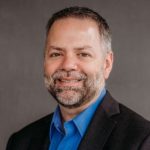 09:10 Industry Keynote: Project Glasswing (P10c) Jon Green, CTO, HPE Networking
 09:40 Government Keynote (P10d) Dr. Don Baggett, National Security Agency (NSA)
10:20-11:00 Networking Break in Exhibits
11:00-12:00 Plenary Panel Session
Moderator: John Dunker, Director, CSfC Program Management Office, Panelists TBA
11:00 CSfC PMO Program Updates and Process Improvements; Ask the PMO Panel (P11a) John Dunker, Director, CSfC Program Management Office, Panelists TBA
12:00–13:00 Lunch in Exhibit Area
13:00-14:30 Track Sessions
Salon E
| Agency Perspectives (N12) |
| Moderator: Jay Diem, Founder & CEO, SloariX |
13:00 CSfC Engineering Capability Package & Annex Roadmap (N12a) Nathan DeGruttola, Technical Director – CSfC Engineering, CSfC Program Management Office, National Security Agency (NSA) [60 Min]
14:00 CSfC EUD Composition Guidance Addendum 2.0.0 and Retransmission Device Protection Profile (N12c) Mike Rovnan, ISSE, CSfC Program Management Office, National Security Agency (NSA)
Salon F
| Integrators Experience (S12) |
| Moderator: Bill Downer, Vice President, Sales, RedData, a division of RPI-CS, Inc. |
13:00 CSfC Trusted Integrator Process (S12a) John Dunker, Director, CSfC Program Management Office, National Security Agency (NSA)
13:30 Panel Discussion: Trusted Integrator (TI) Perspective (S12b) Leader: Fred Elliott, Sr. Manager, Business Development, Curtiss-Wright Panelists: Mohammed Abaza, Partner, VP Engineering, Limitless Defense LLC; Daniel Birenkott, Director of Operations, IT Veterans; Eric Gursky, CISSP, C|EHv8 Group Lead, Commercial Solutions for Classified Trusted Integrator Team Cryptographic Modernization Branch Engineering and Systems Integration Directorate C5ISR Center U.S. Army Combat Capabilities Development Command (DEVCOM); Keith Stacy, Managing Director, Networking Practice, Iron Bow Technologies [60 Min]
Salon G
| CSfC in Practice (C12) |
| Moderator: Brian Hayes, Network Engineer, Johns Hopkins University APL |
13:00 Forging the Future (C12a) Darnell Washington, President and CEO of SecureXperts, Incorporated
13:30 Enabling Data at Rest Protection for High-Speed Tactical Edge Operations (C12b) Manuel Offenberg, CTO Chief Architect, RedData, a division of RPI-CS, Inc.; Jonathan Halstuch, Chief Technology Officer, RackTop Systems, Inc.
14:00 USMC Lessons Learned (C12c) Christopher Port, USMC Network Engineering Officer, United States Marine Corps (USMC)
14:30-15:00 Networking Break in Exhibits
15:00-17:00 Track Sessions
15:00 CSfC Solution Registration Efficiency (N13a) John Weisz, CSfC Program Management Office, National Security Agency (NSA) [60 Min]
16:00 CSfC Components List Process (N13c) Steven Fraser, Technical Director, CSfC Program Management Office, National Security Agency (NSA) [60 Min]
Salon F
| PQ Cyber (Q13) |
| Moderator: Brian Hayes, Network Engineer, Johns Hopkins University APL |
15:00 CSfC CNSA 2.0 Post Quantum Implementation Roadmap (Q13a) Mike Rovnan, ISSE, CSfC Program Management Office, National Security Agency (NSA)
15:30 PQC Migration for Federal Agencies—Mandates, Architecture, and an Actionable Playbook (Q13b) Suprotik Ghose, CISO, Graphene Security
16:00 Post Quantum Cryptography – Much Ado About… Something? (Q13c) Joshua Marpet, Chief Compliance Officer, Cyturus [60 Min]
Salon G
| CSfC in Practice (C13) |
| Moderator: Darnell Washington, President and CEO of SecureXperts, Incorporated |
15:00 Identity and Access Control Gaps that Derail CSfC and CMMC Implementations (C13a) Herbert Decker, Cybersecurity Practitioner and Security Strategist, Tretechpro
15:30 The Route to True Drive Encryption Integrity (C13b) Conner Crisafulli, Field Solutions Engineer, Cigent
16:00 Panel Discussion: Enabling Ipad and Iphone Classified Mobility Panel (C13c) Leader: Daniel Odonohue, EVP, Owl Cyber Defense Panelists: Mark Battaglini, Lead Associate, Booz Allen Hamilton; Tim Fahl, CTO, Owl Cyber Defense; Scott Orton, CEO, Owl Cyber Defense; Mark Treleven, Field CTO, Ivanti; [60 Min]
17:00 Adjourn
Tuesday, May 5
08:00-09:00 Registration
09:00-11:00 Conference Session
| Introduction and Overview (R10) |
| Moderator: Ursula Nichols, Vice President of Client Services, Information Security Corporation |
9:00 DIB Cloud Compliance Reality Check (CMMC + DFARS + FedRAMP Reuse) (R10a) Bhanu Jagasia, Founding Samurai, Chief Executive Samurai & Chief Technology Samurai, bladestack.io
A walkthrough of what “compliant cloud” means for DIB products in 2026: scoping boundaries, evidence expectations, typical failure modes, and how to avoid building a “compliance dead-end” architecture that can’t sustain CMMC + DoD + FedRAMP demands.
9:30 FedRAMP Modernization — What Changes for Product Teams and Compliance Ops (R10b) Josh Blaher, Manager, Product Security Engineering, Red Hat
Operator impacts of OMB M‑24‑15: “presumption of adequacy,” reuse expectations, what evidence should become machine-readable, and how product teams should design release processes for continuous monitoring rather than episodic “ATO sprints.”
10:00 Enabling Mobile Compliance Using Cloud Services (R10c) Tom Walheim, Director of Cybersecurity and Deputy Chief Security Officer, Hypori
What IL4/IL5 mean for architecture and business strategy: where vendors blow it (connectivity constraints, identity boundary assumptions, multi-tenant risk), and how to align cloud-native design with the DoD cloud authorization process and SRG expectations.
10:30 Talk: DoD Zero Trust by FY27 — Vendor Requirements for Identity, Devices, Data, Telemetry (R10d) Sean Frazier, Federal CSO, Okta
A vendor-focused translation of Zero Trust: what DIB product teams must support (identity signals, device posture, data tagging/controls, continuous telemetry), what “target level by FY27” implies for roadmaps, and how vendors can avoid building non-interoperable “one-off” ZT features.
11:00-11:30 Networking Break in Exhibits
11:30-12:30 Panel Discussion
| Panel Discussion (R11a) |
| Moderator: Michael Brooks, CMMC Strategy & Engagement Director, A-LIGN |
11:30 Panel: One Evidence Story Across CMMC, DFARS 7012, FedRAMP, and DoD PA/ATO (R11a) Michael Brooks, CMMC Strategy & Engagement Director, A-LIGN Panelists: Roger Abbott, Co-chair of the ABA Public Contract Law on Cybersecurity and Emerging Technologies, Miles & Stockbridge; Justin Beals, CEO & Founder, Strike Graph; Bryan Bowlsbey, Director, CGI Federal, US Defense Business Unit; Daniel Turissini, Cyber Security Specialist, Certified CMMC Assessor (CCA), Educare of Northern Virginia
A working session on the hard part: building a single, defensible authorization boundary and evidence narrative that satisfies overlapping frameworks without duplicative audits and rework. Expect concrete discussion of SSP boundaries, inherited controls, evidence automation, and what “continuous monitoring” means in the real world.
12:30-13:30 Lunch in Exhibits
13:30-15:30 Conference Session
| Cloud Services in Practice (R12) |
| Moderator: Cole French, CMMC Practice Lead, Kratos Defense and Security Solutions |
13:30 Cloud Services Network/Security Monitoring (R12a) Carl Rios, Chief Executive Officer, Founder, Rios Enterprises
Effective monitoring is critical to securing cloud environments that support Defense Industrial Base operations. This talk will explore strategies for network and security monitoring across cloud services, with a focus on visibility, threat detection, and compliance.
14:00 Access Through Zero Trust-Aligned Approaches (R12b) Patrick Perry, Director of Emerging Technology, Zscaler
Organizations must rethink how users, devices, and applications securely access cloud and enterprise resources. This talk will examine how zero trust-aligned approaches are transforming access models across the Defense Industrial Base.
14:30 Cloud & Software Supply Chain Risk — SBOM/Attestation at Scale and Third‑Party Reality (R12c) John Osborne, Senior Principal Solutions Engineer, Chainguard
SBOM is not the finish line. This talk focuses on operationalizing SBOMs, signing/attestation, third-party dependency governance, and what the DIB should learn from incidents where the supply chain or a cloud dependency became the outage/root cause.
15:00 Zero-Trust Architecture in Cloud Services (R12d) Richard Breakiron, Senior Director, Strategic Initiatives and Executive Programs, Commvault
Zero-Trust Architecture is rapidly becoming a cornerstone of secure cloud adoption across the Defense Industrial Base. This talk will explore how zero-trust principles—continuous verification, least-privilege access, and data-centric security—are being applied to modern cloud environments supporting DoD missions.
15:30-16:00 Networking Break in Exhibits
16:00-17:00 Panel Discussion
| Panel Discussion (R13) |
| Moderator: Matt Goodrich, Director, Federal Security Compliance SME, Diligent |
16:00 Panel: Mission Assurance — Resilience, Performance, Cost (FinOps), and Contracting Tradeoffs (R13a) Leader: Matt Goodrich, Director, Federal Security Compliance SME, Diligent Panelists: Sridhar Balasubramanian, Principal Product Security Architect, NetApp; Derrick Davis, Senior Fellow of the CREM Institute at UMBC; Joshua Fallon, Senior Network Defense Analyst Monitoring & Response Directorate CERT Division, Software Engineering Institute, Carnegie Mellon University; Adam Golodner, Managing Partner, AMG Global Cyber Law, PLLC
A closing panel dedicated to the hard tradeoffs: controlling spend without breaking mission performance, designing resilience that survives dependency failures, and writing contracts/SLA language that can be monitored and enforced continuously (not just promised).